Custom WordPress vs Page Builders: A Long-Term Perspective
Custom WordPress and page builders serve different needs. Learn the long-term differences in performance, flexibility, and maintainability.
Chapters
When building a WordPress website, one of the most common decisions is whether to use a page builder or a custom development approach.
Both methods can produce functional websites.
The real differences often appear later, as the website grows and evolves.
Understanding the long-term implications of each approach helps businesses choose the structure that best fits their needs.
What Page Builders Offer
Page builders were designed to make website creation easier.
They allow pages to be built visually without writing code.
Layouts can be created quickly, and content editors can update pages directly in the browser.
This flexibility makes page builders attractive for many projects, particularly when websites need to launch quickly or change frequently.
For smaller websites or marketing-focused pages, this approach can work well.
However, page builders also introduce structural complexity that can affect performance and maintenance over time, as discussed in The Hidden Maintenance Cost of Page Builders.
What Custom WordPress Development Means
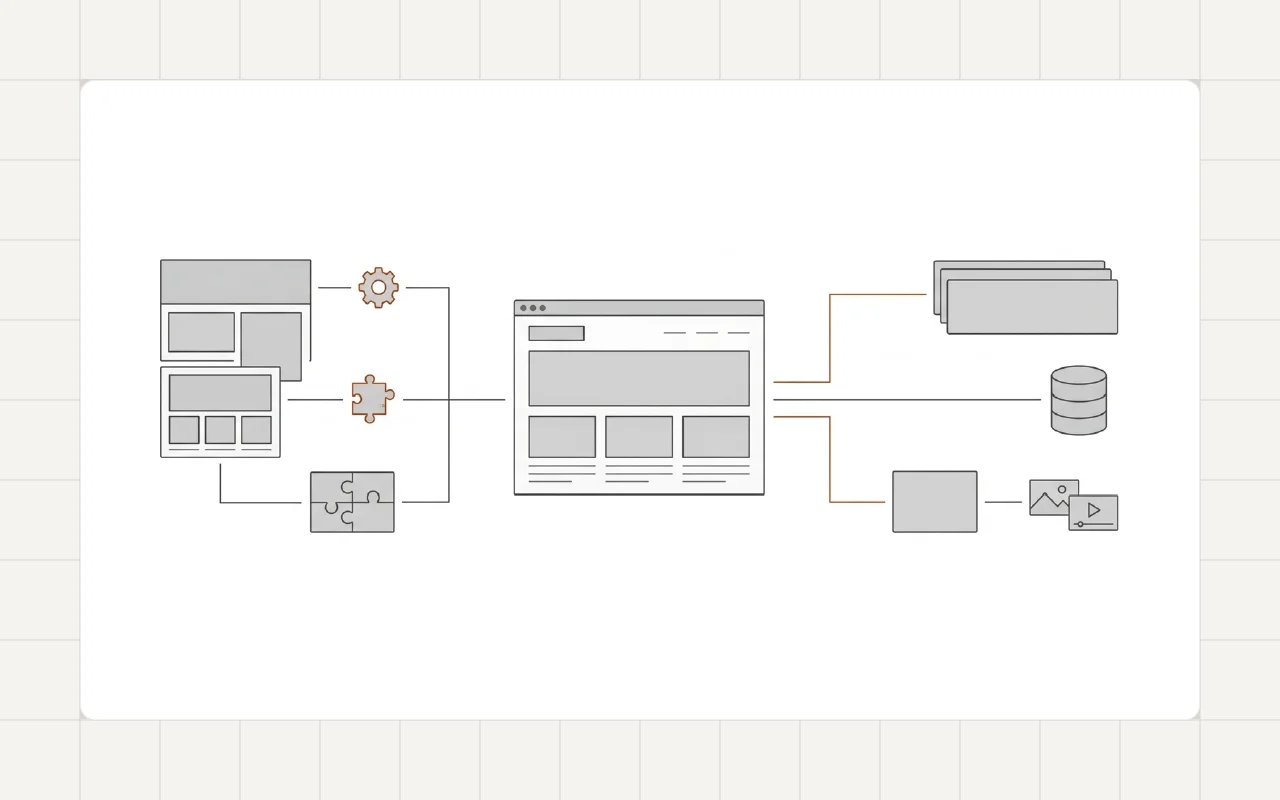
Custom WordPress development focuses on building the website structure directly within the theme and supporting plugins.
Instead of assembling pages from builder components, layouts and functionality are implemented with structured code.
This approach allows developers to control:
- how assets load
- how templates are structured
- how features interact with the system
Because the architecture is carefully defined, custom builds are often easier to maintain as projects grow.
Clean structure is a key part of this process and is explored further in Clean WordPress Architecture for Long-Term Maintainability.
Performance Differences
One of the most noticeable differences between custom builds and page builders appears in performance.
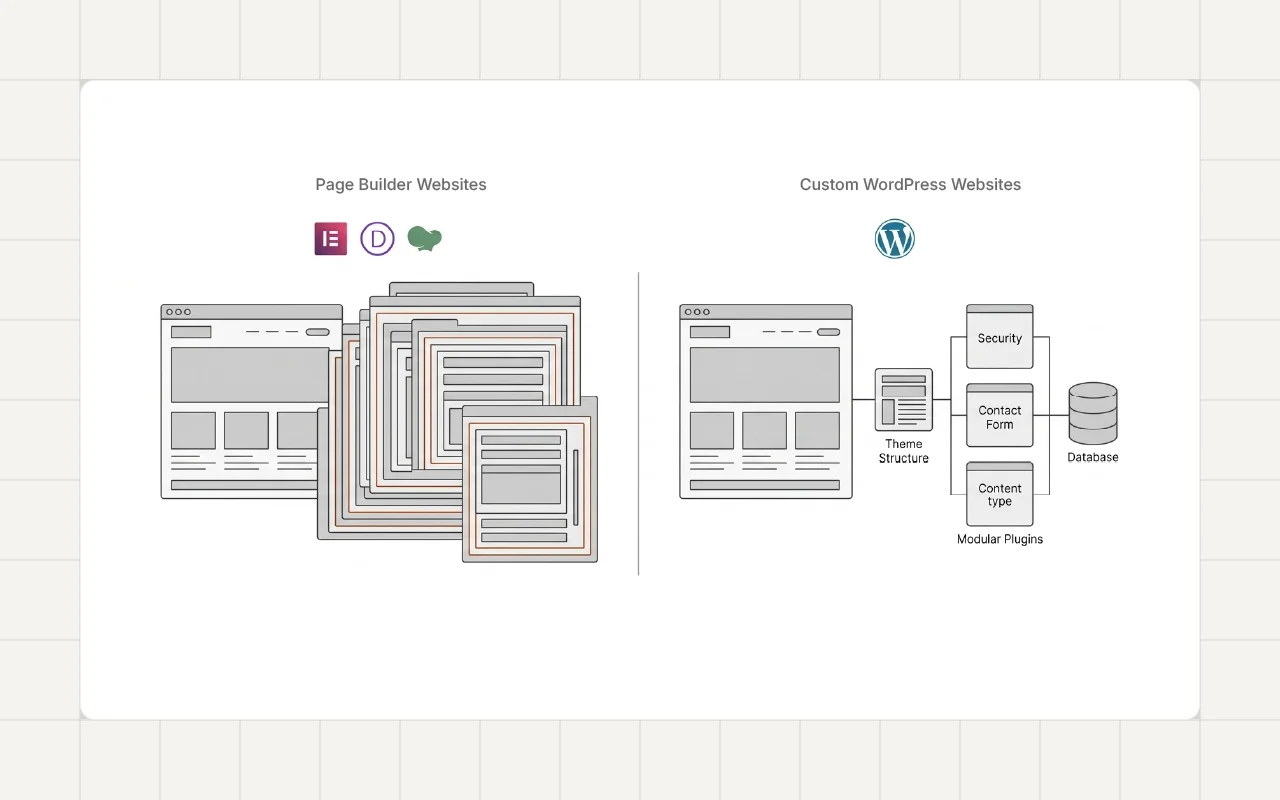
Page builders typically introduce additional layers of HTML structure, scripts, and style frameworks.
While these tools provide flexibility, they can also increase page weight and rendering time.
This additional overhead is one reason many WordPress websites gradually become slower over time, a pattern explained in Why Most WordPress Websites Become Slow Over Time.
Custom development allows developers to load only the assets required for each page, which often results in a lighter and faster system.
Flexibility and Control
Page builders prioritize visual flexibility.
New sections and layouts can be created quickly without modifying code.
Custom development prioritizes architectural control.
Layouts, components, and scripts are structured intentionally, which allows developers to maintain consistency across the website.
For complex projects, this structured control can simplify future changes.
Maintenance Considerations
Maintenance differences often appear months or years after launch.
Page builder websites sometimes accumulate:
- additional builder extensions
- overlapping plugins
- complex page structures
This can increase maintenance effort as the system grows.
These patterns are closely related to the plugin accumulation problem described in Why Plugin Bloat Slowly Breaks WordPress Websites.
Custom builds, when structured carefully, often reduce this type of dependency growth.
Real-World Example
Different approaches may be appropriate depending on the project.
For example, the Custom WordPress Website for a Home Renovation Construction Company was developed with a custom structure to ensure long-term maintainability and performance.
In other cases, projects such as the Creative Coaching Website Built with Elementor for a Teen & Parent Program used Elementor to allow flexible content updates while maintaining a manageable structure.
Choosing the right approach depends on the project goals and expected growth.
When Page Builders Make Sense
Page builders can be a practical solution in several situations.
For example:
- small business websites
- landing pages and marketing sites
- projects requiring frequent layout changes
- teams that need visual editing tools
When used carefully, page builders can provide a useful balance between flexibility and development effort.
When Custom Development Is the Better Choice
Custom development is often a better fit for projects that require:
- long-term scalability
- performance optimization
- complex functionality
- structured architecture
These projects benefit from a system designed specifically for their requirements.
Long-Term Perspective
Both page builders and custom development have valid use cases.
The important question is not which approach is universally better, but which approach aligns with the goals of the project.
Understanding the long-term impact on performance, flexibility, and maintenance helps guide that decision.
Conclusion
Page builders and custom WordPress development represent two different ways of building websites.
Page builders prioritize speed of development and visual flexibility.
Custom development focuses on structure, performance, and long-term maintainability.
Choosing the right approach depends on the needs of the project and how the website is expected to evolve over time.
If you’re deciding between a page builder and a custom WordPress solution for your project, feel free to reach out.