Clean WordPress Architecture for Long-Term Maintainability
Clean WordPress architecture improves performance, maintainability, and long-term stability. Learn how structured development prevents technical debt.
Chapters
Most WordPress websites work well when they are first launched.
Problems usually appear later.
As the website grows, new features are added, plugins accumulate, and the structure becomes harder to maintain.
This gradual complexity is often the reason many websites become slower and more difficult to manage, as discussed in Why Most WordPress Websites Become Slow Over Time.
Clean architecture helps prevent these problems before they appear.
What Clean WordPress Architecture Means
Clean architecture in WordPress is not about using fewer features.
It is about organizing the system in a way that remains predictable and maintainable over time.
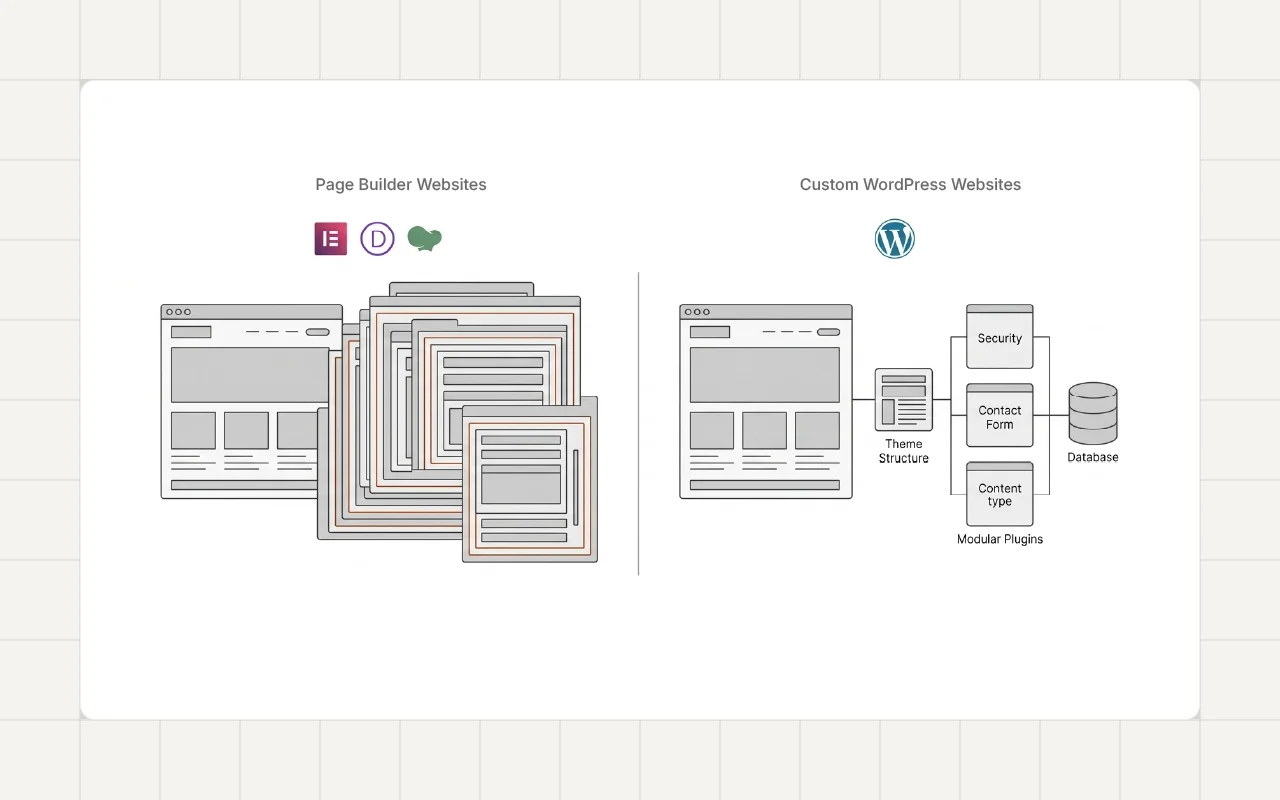
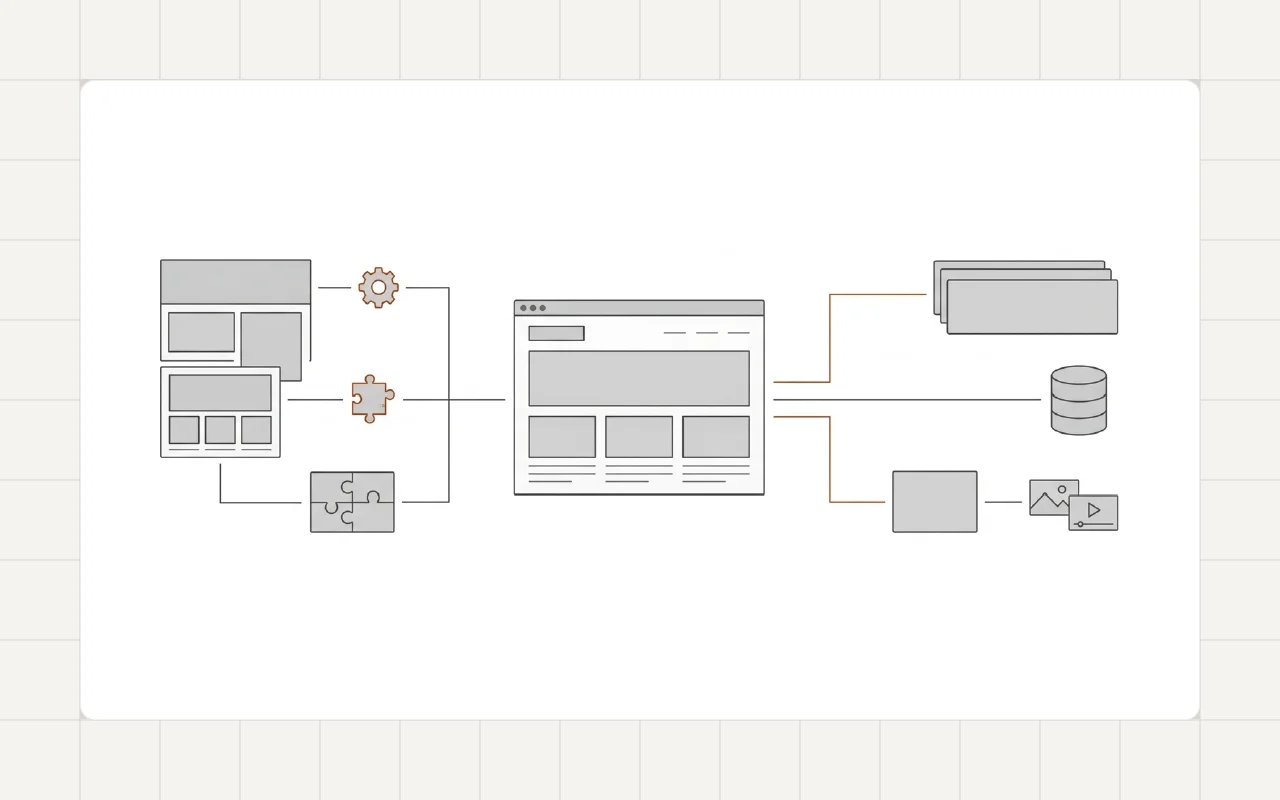
A well-structured WordPress project typically separates responsibilities clearly.
For example:
- the theme handles presentation
- plugins provide specific functionality
- assets are loaded only where needed
- the database remains organized and efficient
This separation makes the system easier to understand and modify.
Why Architecture Matters in WordPress Projects
Many performance and maintenance issues come from structural decisions made early in a project.
When architecture is not carefully considered, websites often develop:
- plugin overlap
- unnecessary scripts
- tightly coupled functionality
- difficult upgrade paths
These issues frequently contribute to performance problems such as plugin overload and heavy scripts, which were explored in Why Plugin Bloat Slowly Breaks WordPress Websites.
Common Architectural Problems
Several patterns appear repeatedly in poorly structured WordPress websites.
Theme Overload
Some themes attempt to handle everything:
- layouts
- custom functionality
- plugin-like features
- complex script loading
This makes the theme difficult to maintain and replace.
Plugin Dependency Chains
When multiple plugins depend on each other, small updates can cause unexpected issues.
This increases long-term maintenance risk.
Global Asset Loading
Many themes and plugins load scripts and styles across every page.
This increases page weight and negatively affects metrics such as those discussed in Real Causes of Poor Core Web Vitals in WordPress.
Real-World Example
Architecture becomes especially important as websites grow.
For example, during the development of a Custom WordPress FSE Website for a Tech Startup, a clean structure was used to separate layout components, reusable blocks, and performance-focused asset loading.
This type of structured development makes future updates easier and keeps performance consistent as the website evolves.
A Developer Perspective
Experienced developers usually approach WordPress projects as systems rather than collections of plugins.
Instead of adding features wherever possible, they focus on structure first.
A maintainable WordPress project typically emphasizes:
- clear separation of functionality
- minimal plugin dependency
- reusable components
- controlled asset loading
This approach reduces technical debt and improves long-term stability.
Practical Principles for Clean WordPress Architecture
Several practices help keep WordPress projects maintainable.
Keep Themes Focused on Presentation
Themes should primarily control layout and visual structure.
Business logic is usually better placed in plugins.
Minimize Plugin Overlap
Choose plugins carefully and avoid installing multiple tools that solve the same problem.
Load Assets Selectively
Scripts and styles should load only where they are needed.
This keeps pages lighter and improves performance.
Use Reusable Components
Reusable blocks, patterns, and structured layouts make it easier to maintain design consistency.
Long-Term Perspective
Clean architecture does not always produce immediate visible changes.
Its benefits appear over time.
Websites built with structured development practices remain easier to update, optimize, and scale.
This stability becomes increasingly valuable as projects grow and evolve.
Conclusion
WordPress architecture often determines how well a website performs months or years after launch.
A clean, structured approach helps prevent performance issues, plugin overload, and long-term maintenance problems.
Investing in good architecture early can significantly improve the stability and longevity of a WordPress project.
If you’re planning a new WordPress project or restructuring an existing one, feel free to reach out.