Elementor Redesign and Migration for a Large Adventure & Hiking Website
Redesigning and migrating a 60+ page hiking association website to Elementor with improved performance and easier content management.
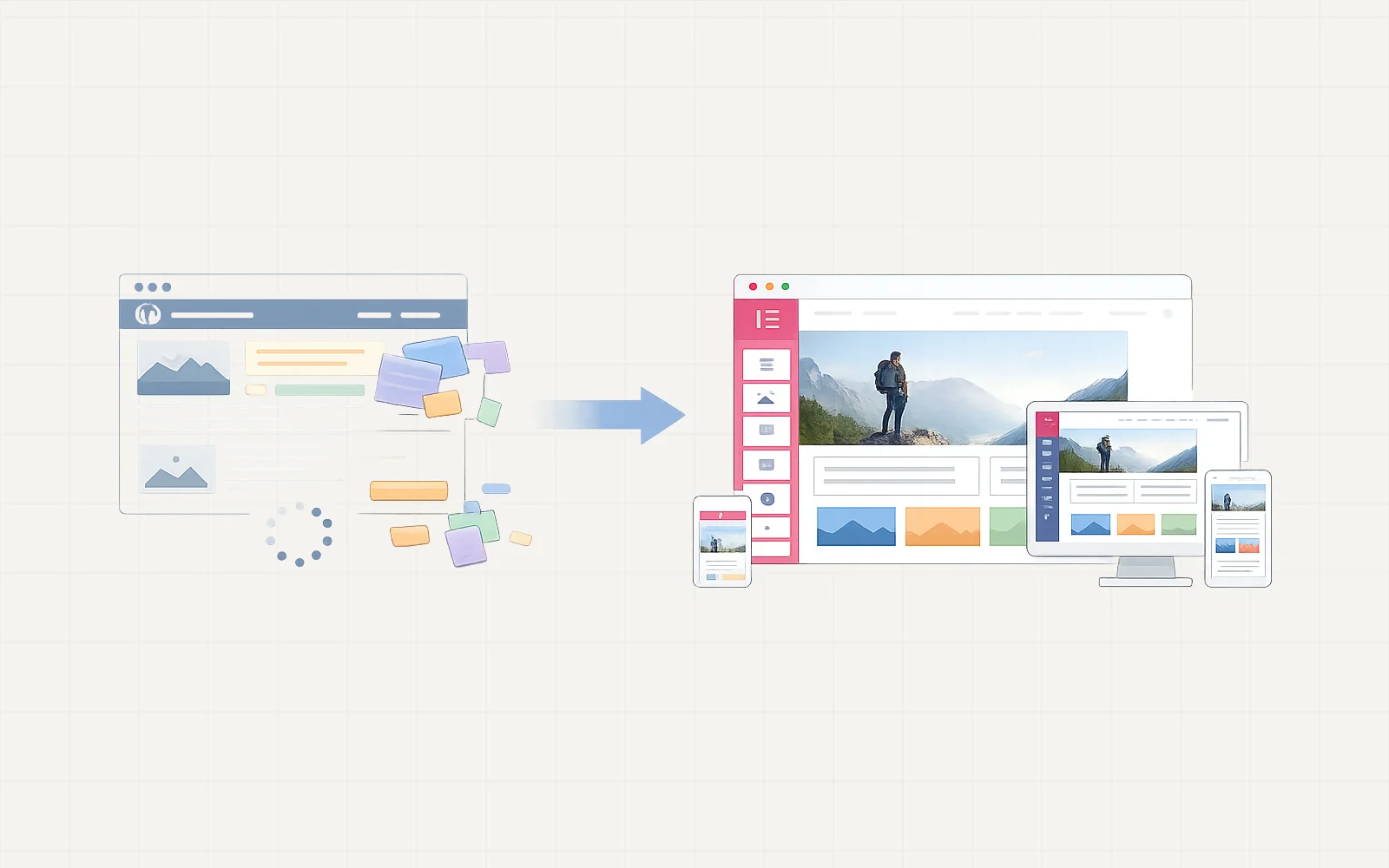
Due to client NDA restrictions, project visuals are represented with simplified illustrations. The architecture and metrics reflect the actual implementation.
Chapters
Project Overview
A well-established adventure and hiking organization needed to modernize its large WordPress website while preserving years of important content.
The existing website contained over 60 pages, including event schedules, trail information, posts, and stories. Although functional, the site had become outdated and difficult for the organization to maintain.
The objective of the project was to redesign the website with a modern look while introducing a content management system that would make updates easier for the team.
After reviewing several options, Elementor was selected as the page builder because of its flexibility and ease of use for non-technical users.
Migration Challenges
One of the most challenging aspects of the project was migrating content from the old website.
The previous site used a theme-based drag-and-drop editor where much of the content was stored together with editor markup. This resulted in mixed HTML and editor-generated data, making direct migration difficult.
Before importing the content into the new site, the data had to be carefully cleaned and structured to remove the legacy markup.
Because the website contained a large amount of historical content and event information, the migration required careful verification to ensure that no important information was lost.
Content Structure Improvements
The website contained many sections where important information was repeated across multiple pages, such as hiking schedules and trail information.
To simplify long-term maintenance, Elementor global templates were used for these sections. This allows the organization to update shared information from a single location instead of editing multiple pages individually.
Additionally, Custom Post Types and ACF fields were implemented to manage structured content such as team members and story posts more efficiently.
Design Implementation
The new design was provided by the agency’s design team and required precise implementation.
Several dynamic and static content sections were included across the website, including custom sliders for highlighting events and stories.
These sliders were implemented using Smart Slider Pro to ensure smooth performance while matching the visual design.
The layout also included numerous custom sections, each carefully built to maintain consistency with the design files.
Third-Party Integrations
The website required several external integrations to support the organization’s activities.
These included:
• Click & Pledge for donation processing
• Mailchimp for email marketing
• Instagram gallery integration for social media content
• external event-related tools used by the organization
These integrations were implemented while maintaining consistent styling across the site.
Media Organization
Because the website contained a large number of images from hiking events and trails, the media library needed better organization.
A lightweight media organization plugin was introduced to categorize media assets, making it easier for the team to manage and locate images.
Performance Improvements
The previous website had an average page load time of around 7 seconds.
To improve performance, several optimizations were implemented:
• removing unnecessary scripts
• replacing heavy embedded content with on-demand popups
• optimizing media assets
• simplifying plugin usage
As a result, the new website achieved an average page load time of approximately 4 seconds and a PageSpeed score of around 90.
Collaborative Development Process
Throughout the development process, the client remained closely involved.
Regular previews allowed the organization to verify that important information such as hiking schedules, trail details, and event information had been transferred correctly.
This collaborative workflow helped ensure that the new site preserved all critical information while improving usability.
Results
The redesigned website provides a modern and easier-to-maintain platform for the organization.
Key outcomes included:
• 60+ pages successfully redesigned and migrated
• cleaner content structure for easier editing
• improved page load performance
• multiple external integrations maintained
Long-Term Impact
The new Elementor-based system allows the organization’s team to update pages, manage content, and maintain the website without requiring technical assistance.
With improved structure and performance, the site is now better equipped to support the organization’s ongoing programs, events, and community engagement.