WordPress Performance Optimization for a Travel Agency Website
Optimizing a travel agency website by improving asset loading, implementing caching, and reducing plugin overhead.
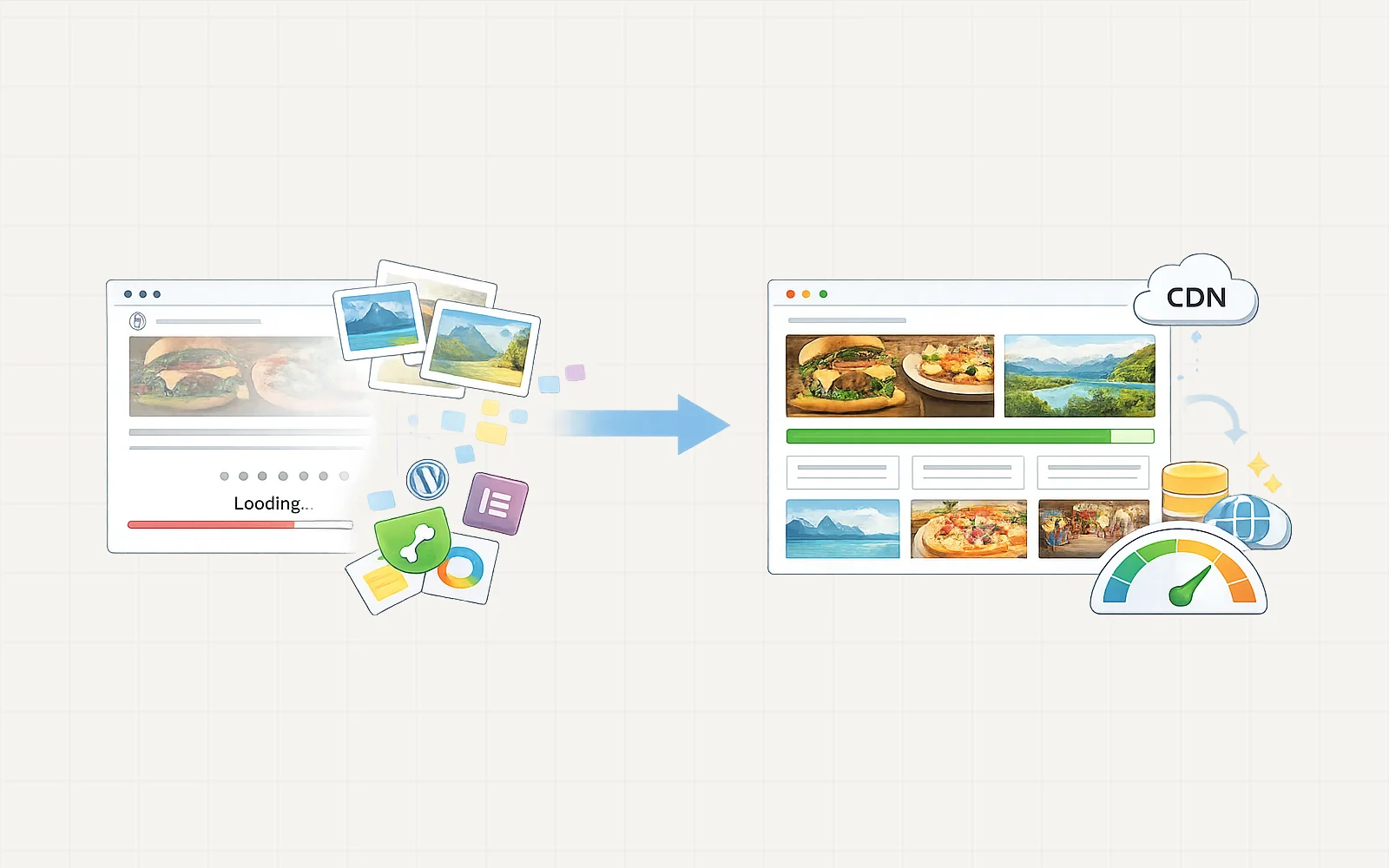
Due to client NDA restrictions, project visuals are represented with simplified illustrations. The architecture and metrics reflect the actual implementation.
Chapters
Project Overview
A travel agency contacted me because their WordPress website had become increasingly slow, particularly on pages featuring destination galleries and travel packages.
The site relied heavily on large images and multiple third-party scripts, which significantly increased page load time.
The goal of the project was to improve loading performance while preserving the rich visual presentation that is important for travel websites.
Initial Performance Audit
The first step was conducting a full performance audit to understand the causes of the slow load times.
Several issues were identified:
• large, unoptimized destination images
• multiple unnecessary plugins adding extra scripts
• no caching configuration
• lack of CDN for faster asset delivery
• unoptimized CSS and JavaScript assets
These issues collectively increased server load and slowed down page rendering.
Image and Media Optimization
Travel websites rely heavily on high-resolution imagery to showcase destinations.
To improve performance, the media library was reviewed and optimized by:
• resizing images to appropriate container sizes
• compressing large images
• removing duplicated or unused files
This process reduced media storage by approximately 180 MB, significantly lowering overall page weight.
Plugin and Asset Cleanup
Several plugins installed on the website were either outdated or unnecessary.
After reviewing the plugin setup, redundant plugins were removed and asset loading was simplified.
In total, seven plugins were removed, reducing the number of scripts loaded on each page.
Caching and CDN Setup
Because the hosting server used LiteSpeed technology, caching was implemented using LiteSpeed Cache.
The configuration included:
• full page caching
• CSS and JavaScript minification
• lazy loading for images
• cache preloading
Additionally, Cloudflare CDN was integrated to distribute static assets globally and reduce latency for visitors from different regions.
Performance Results
After implementing the optimization workflow, the website showed significant performance improvements.
Average page load time improved to approximately 2.6 seconds, providing a smoother browsing experience for visitors.
Google PageSpeed scores also improved to around 91, reflecting better asset optimization and caching efficiency.
Quality Assurance
Before completing the project, the website was tested across multiple pages and devices to ensure:
• layouts remained consistent
• images displayed correctly
• caching did not interfere with functionality
Results
The optimization significantly improved the website’s performance and usability.
Key outcomes included:
• average page load time reduced to around 2.6 seconds
• seven unnecessary plugins removed
• 180 MB reduction in media storage
• PageSpeed score improved to 91
Long-Term Impact
With optimized media assets and proper caching infrastructure in place, the travel agency website now delivers a much faster browsing experience.
Visitors can explore destinations and travel packages smoothly, while the site remains easier for the agency team to maintain and update.