Why WordPress Performance Optimization Often Fails
Many WordPress performance optimizations fail because they treat symptoms instead of causes. Learn the real reasons optimization efforts break down.
Chapters
Many website owners try to optimize their WordPress performance.
They install caching plugins. They compress images. They run speed tests.
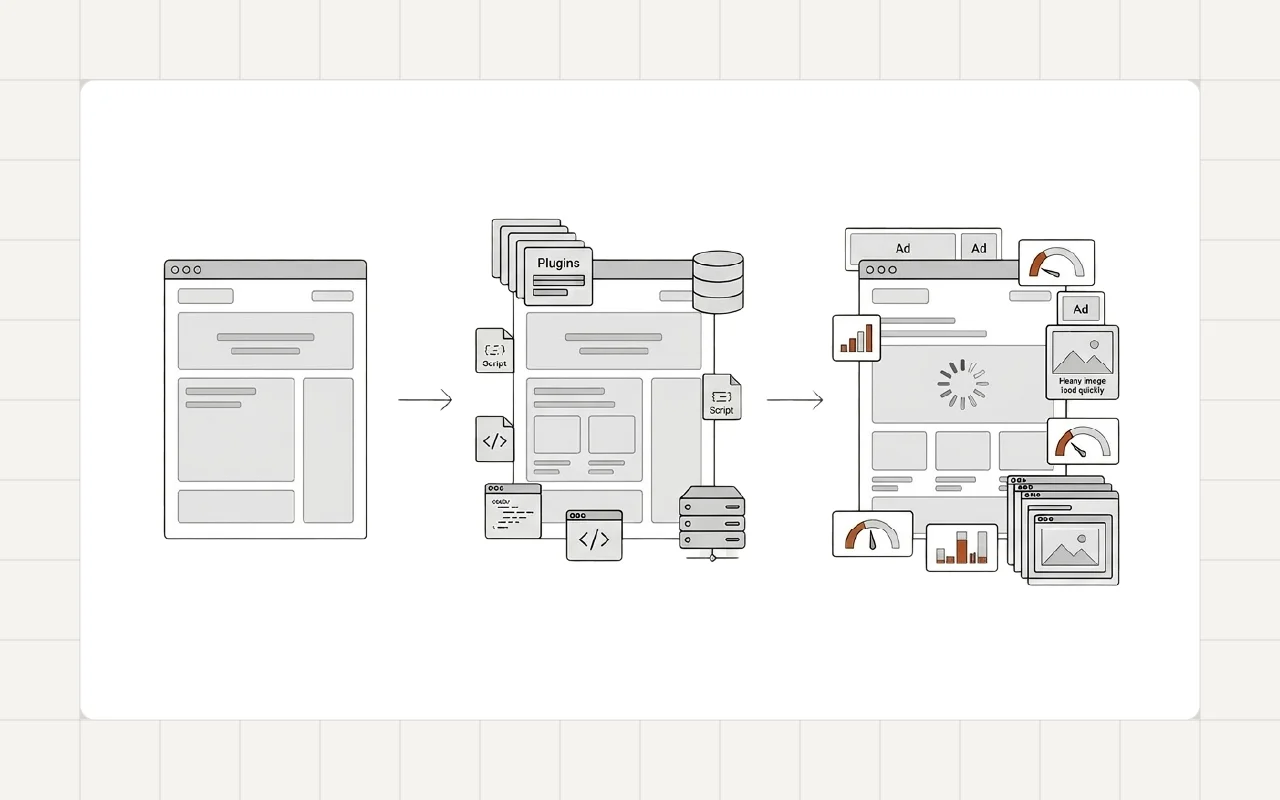
Sometimes the website becomes faster for a short time.
But a few months later, the performance problems return.
This pattern happens often because optimization efforts focus on quick fixes instead of addressing the underlying structure of the website.
Optimization Often Focuses on Tools
Many optimization guides focus on tools.
They recommend:
- caching plugins
- image compression tools
- performance plugins
- script minification
These tools can help.
But tools alone rarely solve deeper performance problems.
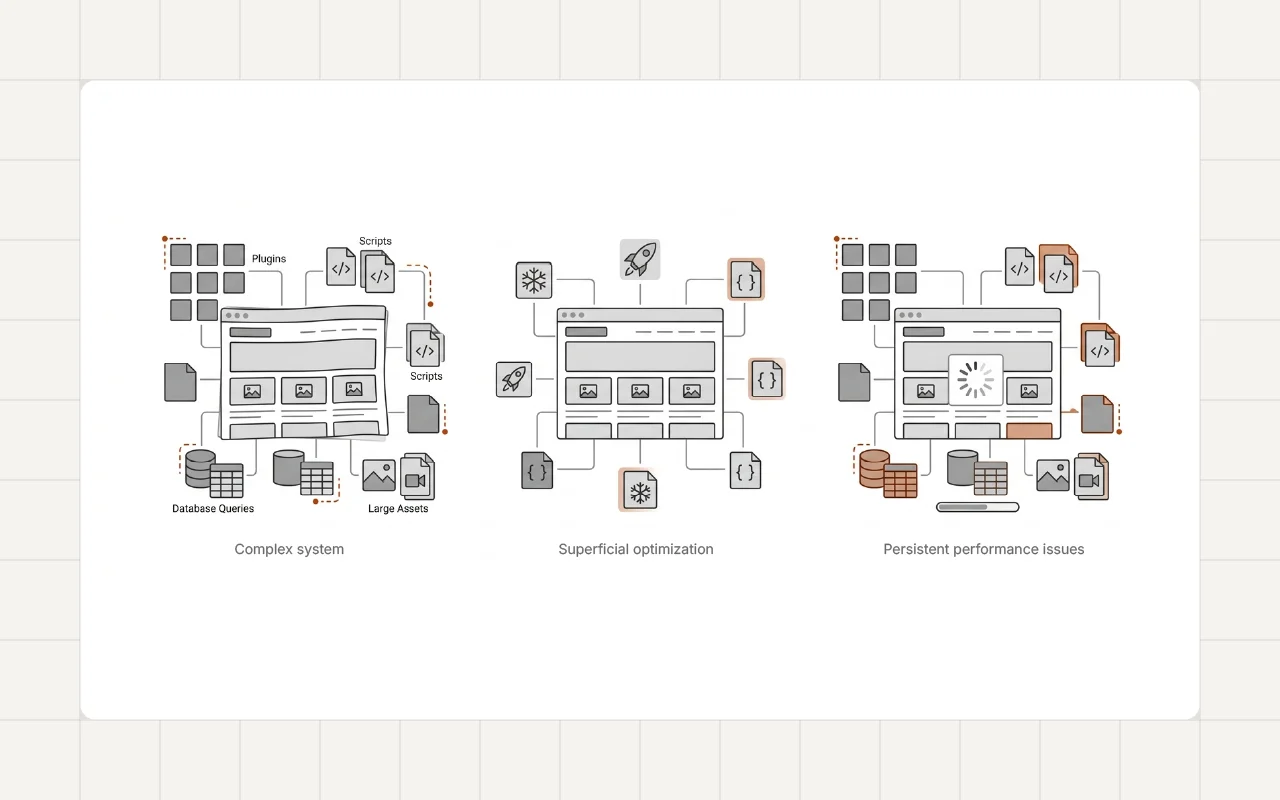
When the underlying structure of a website is heavy or complex, optimization plugins only treat the symptoms.
Performance Problems Often Begin in Development
Many performance issues originate during development.
For example:
- unnecessary scripts may load globally
- page builders may introduce complex layout structures
- plugins may duplicate functionality
These structural choices affect how the system behaves long after the website launches.
This gradual performance decline is explained in Why Most WordPress Websites Become Slow Over Time.
Fixing these issues later is often more difficult than preventing them during development.
Plugin Accumulation
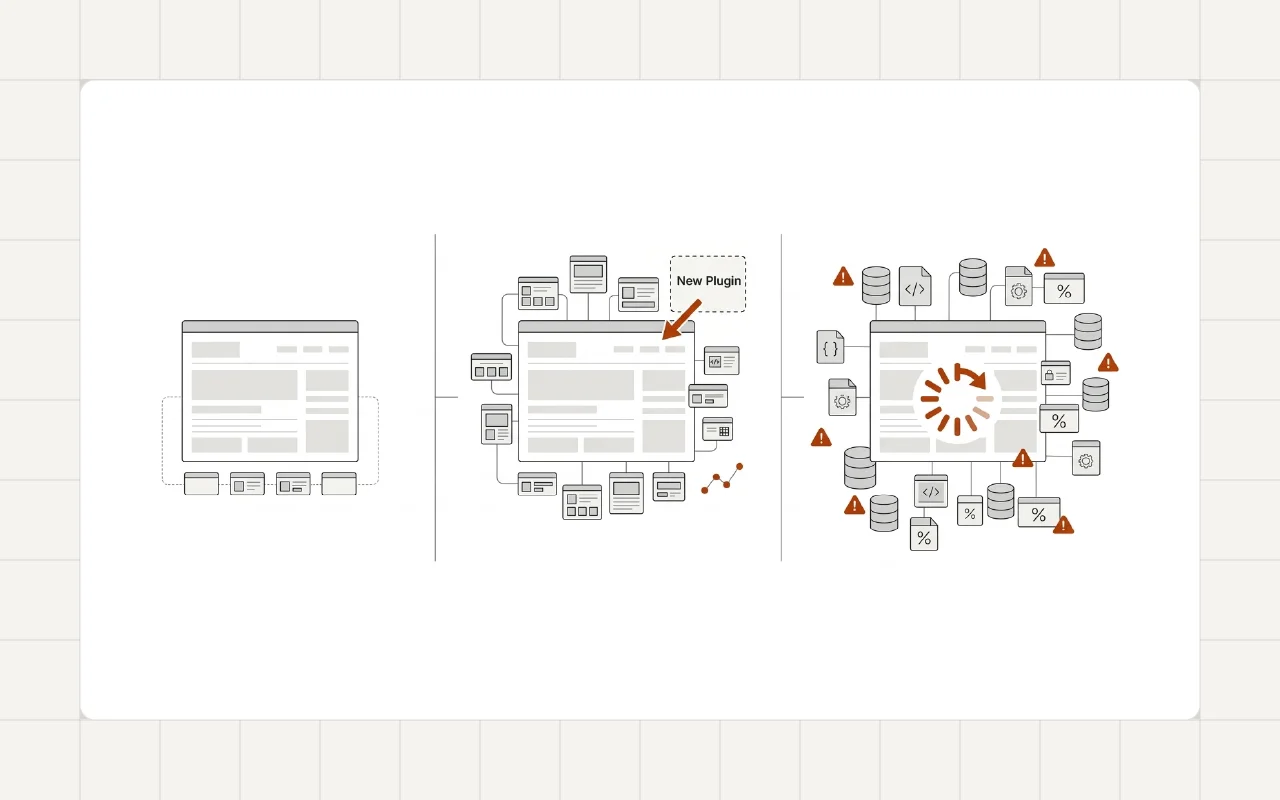
One of the most common reasons optimization fails is plugin accumulation.
When many plugins run simultaneously, they add:
- additional database queries
- JavaScript and CSS files
- background processes
Even strong caching systems cannot fully compensate for excessive plugin overhead.
This problem is discussed in more detail in Why Plugin Bloat Slowly Breaks WordPress Websites.
Structural Complexity
Another reason optimization fails is structural complexity.
Page builders and theme frameworks often create deeply nested layout structures and load large asset bundles.
This increases page weight and rendering time.
These patterns often contribute to performance metrics such as those discussed in Real Causes of Poor Core Web Vitals in WordPress.
When structural complexity is high, small optimizations produce only limited improvements.
The Limits of Performance Plugins
Performance plugins are helpful tools, but they are not magic solutions.
Caching plugins can reduce server workload.
Minification can reduce file size.
However, these tools cannot remove unnecessary system complexity.
If a page loads many scripts and layout layers, caching alone will not fully solve the problem.
Real-World Example
Performance optimization projects often involve identifying the root causes of slow websites.
For example, during the WordPress Performance Optimization for a Law Firm Website project, improvements came not only from caching adjustments but also from simplifying asset loading and reducing unnecessary scripts.
Addressing structural issues made the performance improvements more sustainable.
A More Effective Approach
Successful optimization usually focuses on the system as a whole.
Instead of applying isolated fixes, developers examine:
- plugin usage
- asset loading patterns
- theme architecture
- media optimization
A structured approach to development helps prevent many of these issues from appearing in the first place, which is discussed in Performance-First WordPress Development: A Practical Approach.
Long-Term Perspective
Performance optimization is not a single task.
It is an ongoing process that depends on the overall structure of the website.
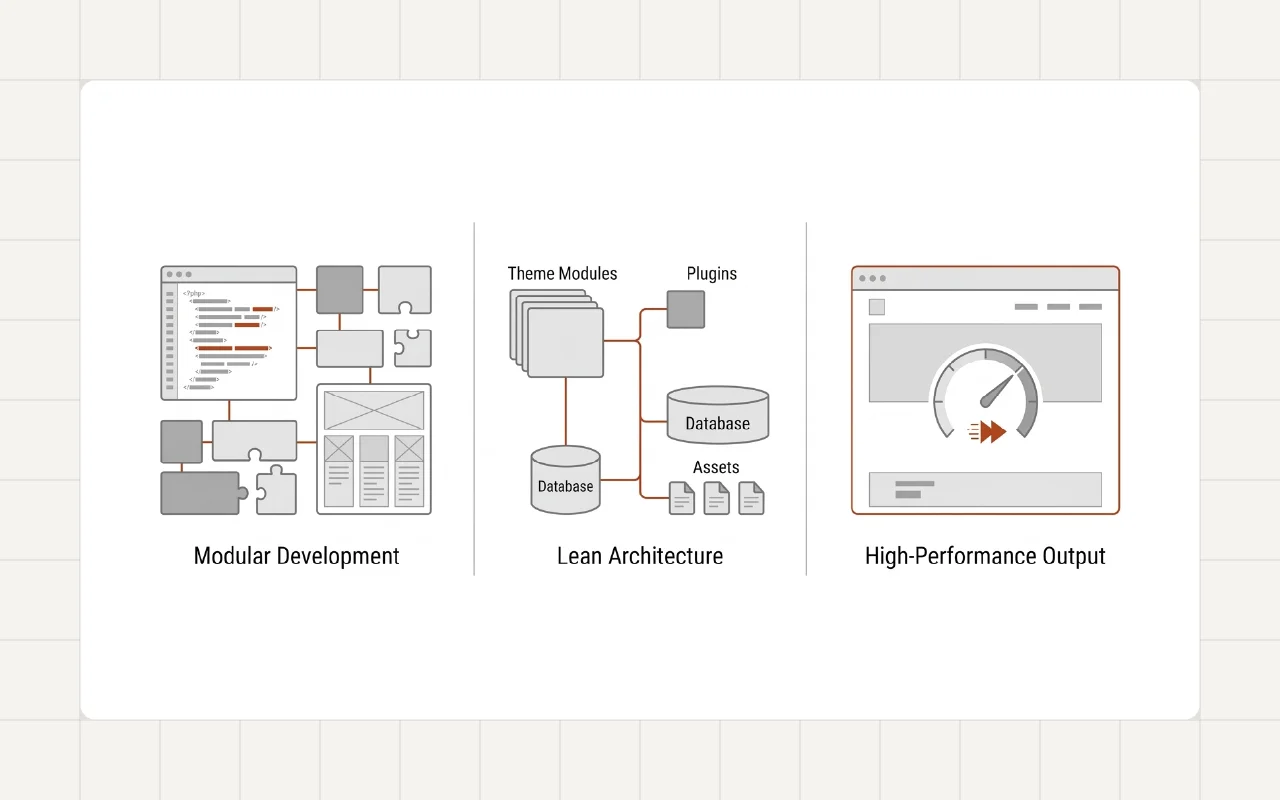
Projects built with clean architecture and careful development practices are easier to optimize and maintain over time.
Websites that accumulate complexity often require deeper restructuring to achieve lasting performance improvements.
Conclusion
WordPress performance optimization often fails because it focuses on tools rather than underlying architecture.
Caching, compression, and optimization plugins can help, but they cannot fully compensate for structural complexity.
A cleaner system design and careful development practices usually produce more sustainable performance improvements.
If your WordPress website remains slow despite optimization attempts, feel free to reach out.