Why Many WordPress Websites Become Hard to Maintain
Many WordPress websites become difficult to maintain as they grow. Learn the common causes of technical complexity and how to prevent it.
Chapters
Many WordPress websites are easy to manage when they first launch.
Content updates are simple. New pages can be added quickly. Plugins provide useful features.
But over time, maintaining the website becomes more complicated.
Updates start causing issues. Plugins conflict with each other. Small changes take longer than expected.
This situation is common, especially for websites that have evolved over several years.
Understanding why it happens can help prevent these problems in future projects.
How Complexity Builds Over Time
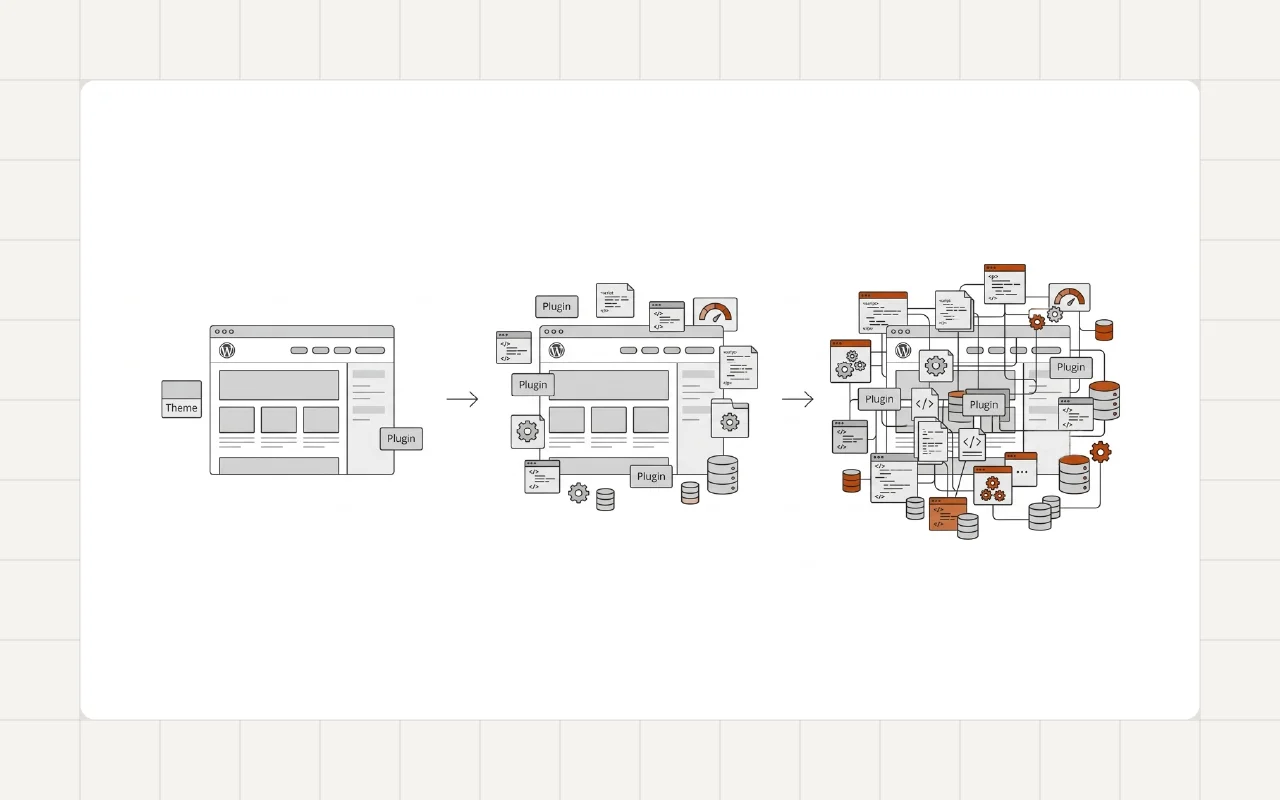
Websites rarely remain static.
New features are added. Plugins are installed. Themes are modified.
Each change may seem small, but together they gradually increase system complexity.
This accumulation is also one of the reasons many websites experience performance issues, as discussed in Why Most WordPress Websites Become Slow Over Time.
When complexity grows unchecked, maintenance becomes increasingly difficult.
Plugin Dependency Growth
Plugins are often the first place where complexity appears.
As websites grow, plugins are added to support new functionality.
Examples include:
- SEO tools
- form builders
- analytics integrations
- page builder extensions
- marketing automation tools
Over time, the number of plugins increases.
This often leads to overlapping functionality, which is a common issue described in Why Plugin Bloat Slowly Breaks WordPress Websites.
The result is a system where multiple plugins affect the same parts of the website.
Theme Customization Over Time
Another common maintenance issue comes from theme modifications.
When websites are customized repeatedly over several years, the theme can accumulate:
- template overrides
- additional scripts
- design adjustments
- compatibility patches
Without a clear architecture, these changes can make the theme difficult to update or modify.
A more structured approach to development can reduce these problems, as explained in Clean WordPress Architecture for Long-Term Maintainability.
Builder and Layout Complexity
Page builders provide flexibility, but they can also introduce structural complexity.
Pages built with many nested containers and widgets become harder to edit and maintain.
Over time, layouts may include:
- deeply nested sections
- unused widgets
- duplicated layout blocks
- builder extensions
These structural layers can make future updates slower and more error-prone.
This is one of the maintenance challenges explored in The Hidden Maintenance Cost of Page Builders.
Performance and Maintenance Are Connected
Maintenance problems and performance problems often appear together.
When a system becomes complex, it usually loads more scripts, runs more queries, and executes more background tasks.
These issues can affect user experience metrics such as those described in Real Causes of Poor Core Web Vitals in WordPress.
A simpler system is usually easier to maintain and faster to load.
Real-World Example
Maintenance complexity often appears in websites that have evolved through multiple development phases.
For example, during the Accessible WordPress Website Rebuild for a Civic Information Platform project, restructuring the system improved maintainability by simplifying templates, reducing plugin overlap, and improving accessibility standards.
This type of refactoring helps keep websites easier to manage over time.
A Developer Perspective
From a development perspective, maintainability is largely determined by structure.
Well-organized WordPress projects usually emphasize:
- clear separation of responsibilities
- carefully selected plugins
- predictable theme structure
- controlled asset loading
These practices make future updates more manageable and reduce long-term technical debt.
Practical Ways to Keep WordPress Maintainable
Maintaining a clean system requires occasional review.
Several practices help prevent complexity from accumulating.
Audit Plugins Periodically
Review installed plugins and remove tools that are no longer needed.
Simplify Page Structures
Complex page builder layouts can often be simplified by removing unnecessary nested elements.
Maintain a Clear Theme Structure
Organizing templates and components makes updates easier in the future.
Monitor System Growth
Tracking how the system evolves helps prevent complexity from growing unnoticed.
Long-Term Perspective
WordPress websites are often long-lived systems.
They evolve over time as businesses grow and requirements change.
Projects that begin with clear architecture and disciplined development practices tend to remain easier to maintain.
Those that accumulate complexity without structure often require significant restructuring later.
Conclusion
Many WordPress websites become difficult to maintain because complexity accumulates gradually.
Plugins, theme modifications, and structural changes all contribute to this growth.
A structured development approach helps keep systems predictable, maintainable, and easier to update as they evolve.
If your WordPress website has become difficult to maintain or update, feel free to reach out.