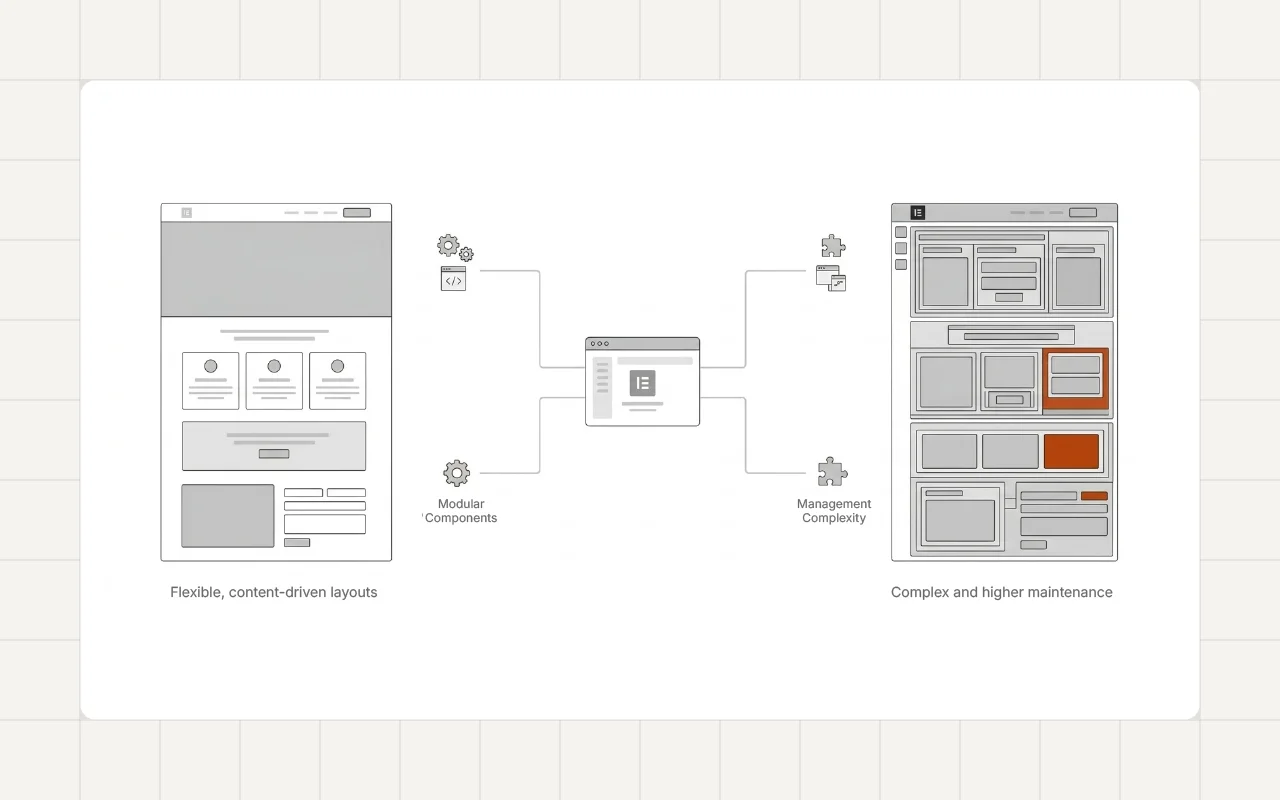
The Hidden Maintenance Cost of Page Builders
Page builders make WordPress easy to launch, but they often introduce long-term maintenance challenges. Learn the hidden costs developers see.
Chapters
Page builders have made WordPress far more accessible.
They allow websites to be designed visually without writing code. Layouts can be built quickly, and new pages can be created with minimal technical knowledge.
For many projects, this convenience is valuable.
However, over time page builders can introduce maintenance challenges that are not immediately obvious when a website is first launched.
Why Page Builders Became Popular
Page builders solve an important problem.
Traditional WordPress themes often required developers to modify templates or write custom code to change layouts.
Page builders introduced a visual editing system where pages could be designed directly in the browser.
This approach made it easier to:
- build landing pages
- update content visually
- experiment with layouts
- launch websites faster
For many small websites, this flexibility works well.
Where Maintenance Challenges Appear
The challenges with page builders rarely appear at the beginning of a project.
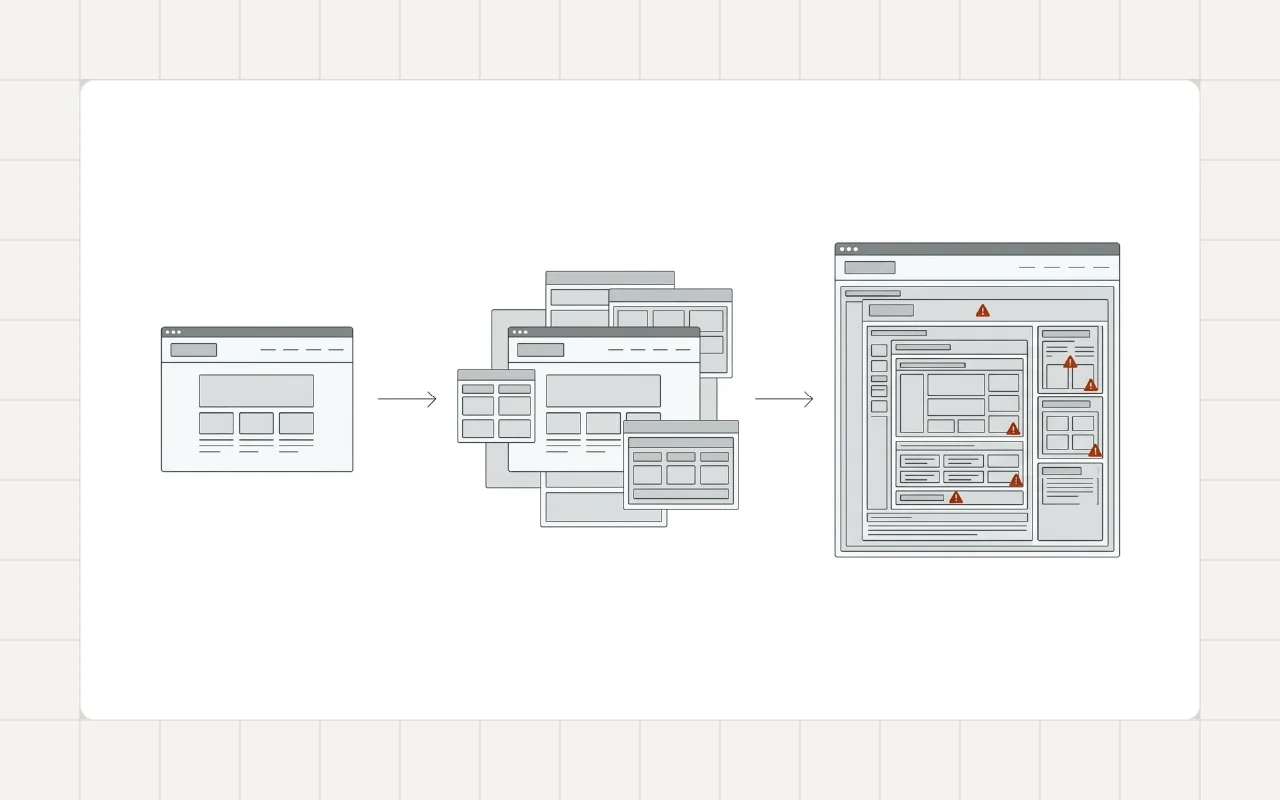
They usually appear later as the website grows.
Over time, page builders often introduce:
- complex page structures
- large numbers of layout containers
- additional scripts and styles
- multiple builder extensions
These factors can make websites harder to maintain and optimize.
Some of the same structural complexity also contributes to performance issues like those discussed in Why Most WordPress Websites Become Slow Over Time.
Increasing Page Complexity
Page builders create layouts by nesting containers and components.
A simple section on the page may contain multiple layers of elements.
For example:
- section
- container
- inner container
- widget
- nested widget
As pages grow, the resulting structure can become significantly more complex than necessary.
This additional complexity often increases the amount of HTML and scripts that must load on each page.
Script and Asset Overhead
Most page builders load their own JavaScript and CSS frameworks.
When multiple builder extensions are installed, additional scripts are added.
This can increase:
- page weight
- rendering time
- interaction delays
These types of issues often contribute to the performance metrics discussed in Real Causes of Poor Core Web Vitals in WordPress.
Plugin Ecosystem Expansion
Many page builders offer large ecosystems of add-ons.
These extensions provide additional widgets, templates, and design tools.
While useful, installing too many extensions can lead to plugin overlap and unnecessary scripts.
This is similar to the plugin accumulation problem explained in Why Plugin Bloat Slowly Breaks WordPress Websites.
Real-World Example
Maintenance challenges often appear when a page builder website grows beyond its original scope.
For example, during the Elementor Redesign and Migration for a Large Adventure & Hiking Website project, the existing builder structure had become difficult to manage due to nested layouts and multiple builder extensions.
Simplifying the structure and improving asset loading made the site easier to maintain and improved overall performance.
A Balanced Developer Perspective
Page builders are not inherently bad.
They solve real problems and can be extremely useful in certain scenarios.
For example, page builders often work well for:
- marketing landing pages
- small business websites
- content-driven sites with frequent layout updates
The key is understanding their limitations and planning the project accordingly.
When Custom Development Becomes a Better Option
For larger or long-term projects, custom development often provides more flexibility.
A structured development approach can:
- reduce unnecessary scripts
- simplify page structure
- improve performance
- make future updates easier
Clean architecture plays an important role in maintaining this structure, which is discussed further in Clean WordPress Architecture for Long-Term Maintainability.
Long-Term Perspective
The long-term success of a website depends on more than how quickly it launches.
It also depends on how easy the system remains to maintain, update, and optimize.
Page builders can be a useful tool, but understanding their trade-offs helps prevent future maintenance challenges.
Conclusion
Page builders make WordPress accessible and flexible.
However, as websites grow, their structural complexity and script overhead can introduce maintenance challenges.
Understanding these trade-offs allows developers and site owners to make more informed decisions about how their websites are built and maintained.
Subtle Contact Line
If you’re maintaining a WordPress website built with a page builder and performance or complexity has become a concern, feel free to reach out.