Performance-First WordPress Development: A Practical Approach
Performance-first WordPress development focuses on clean architecture, minimal plugins, and optimized assets to keep websites fast long term.
Chapters
Many WordPress performance problems appear long after a website launches.
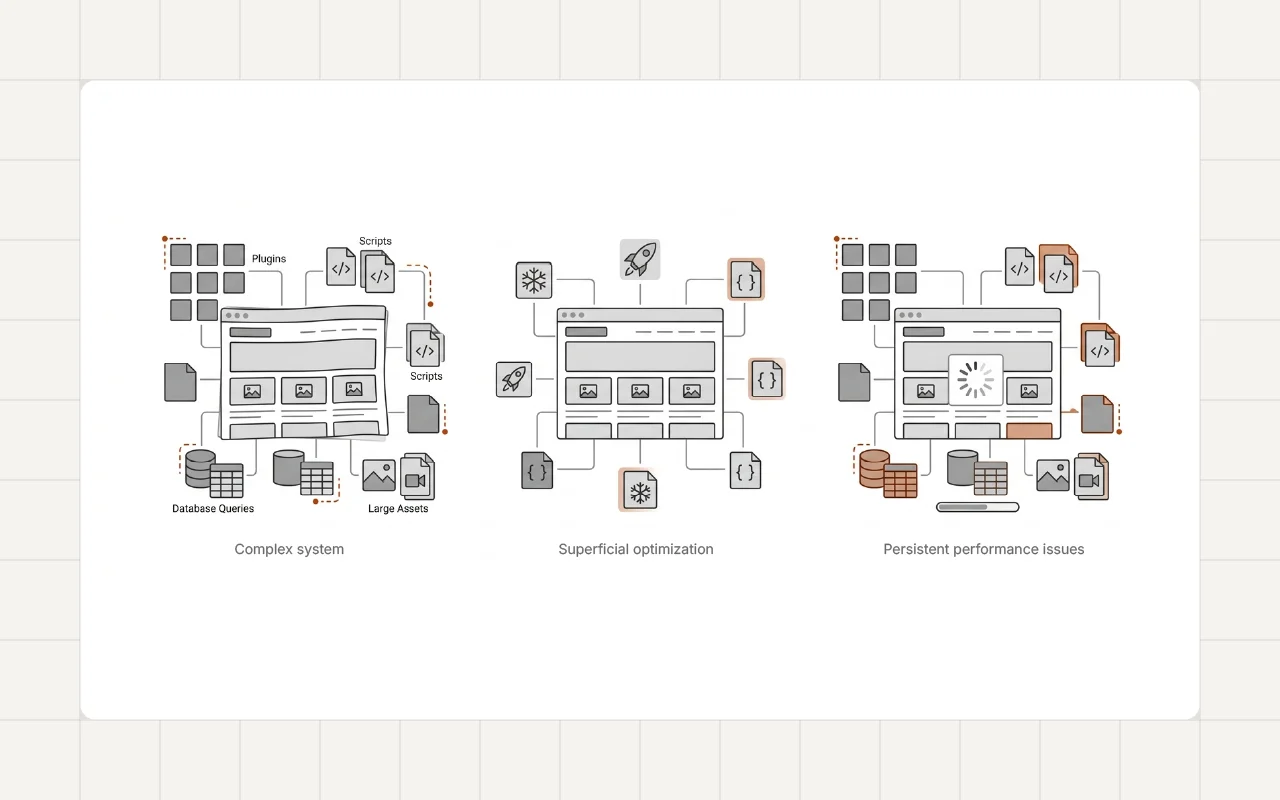
Pages become heavier. Scripts accumulate. Plugins add extra overhead.
Eventually the website becomes slower and harder to maintain.
These problems rarely come from a single mistake. They usually result from decisions made during development.
A performance-first development approach helps prevent these issues from appearing later.
What Performance-First Development Means
Performance-first development treats speed and efficiency as core design principles.
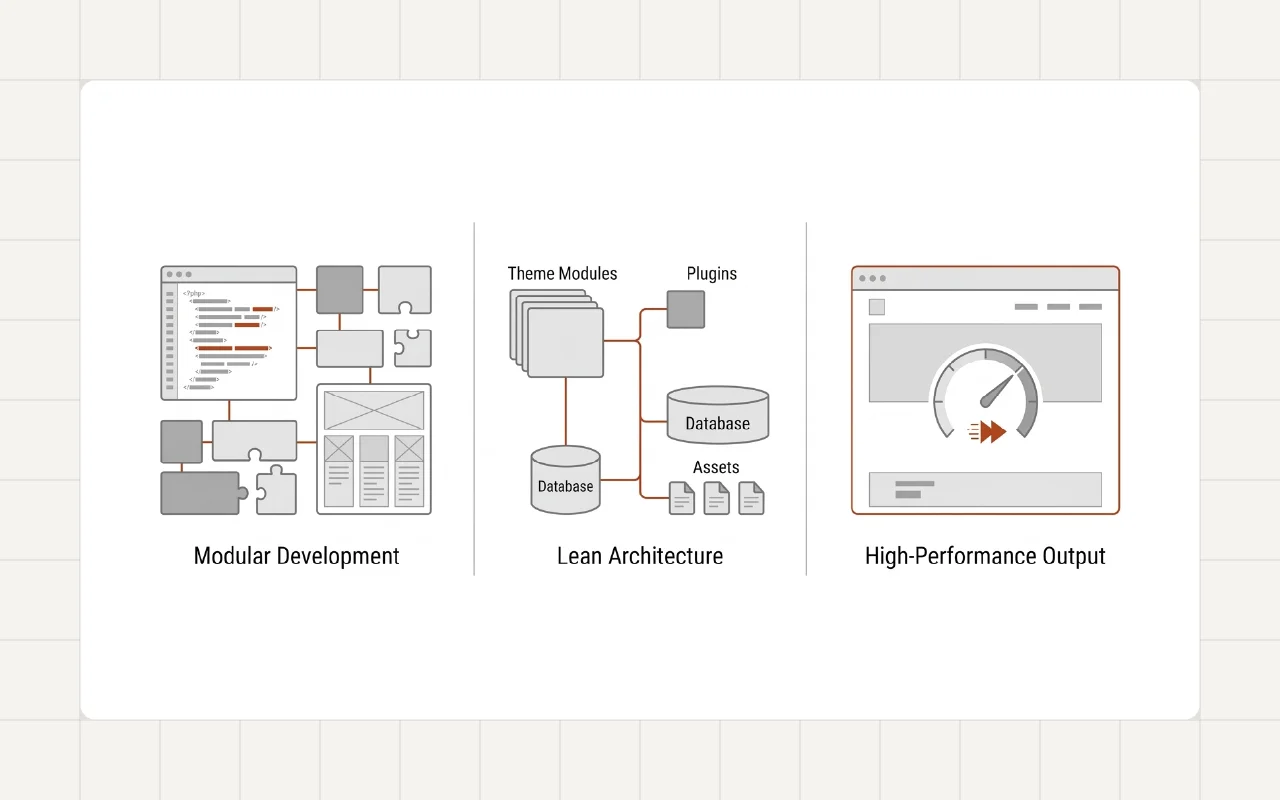
Instead of optimizing performance after problems appear, the system is designed to remain lightweight from the beginning.
This approach focuses on:
- clean architecture
- minimal dependencies
- controlled asset loading
- efficient media handling
Many of the issues that affect performance later in a project originate from structural decisions made early in development.
Why Performance Often Declines Over Time
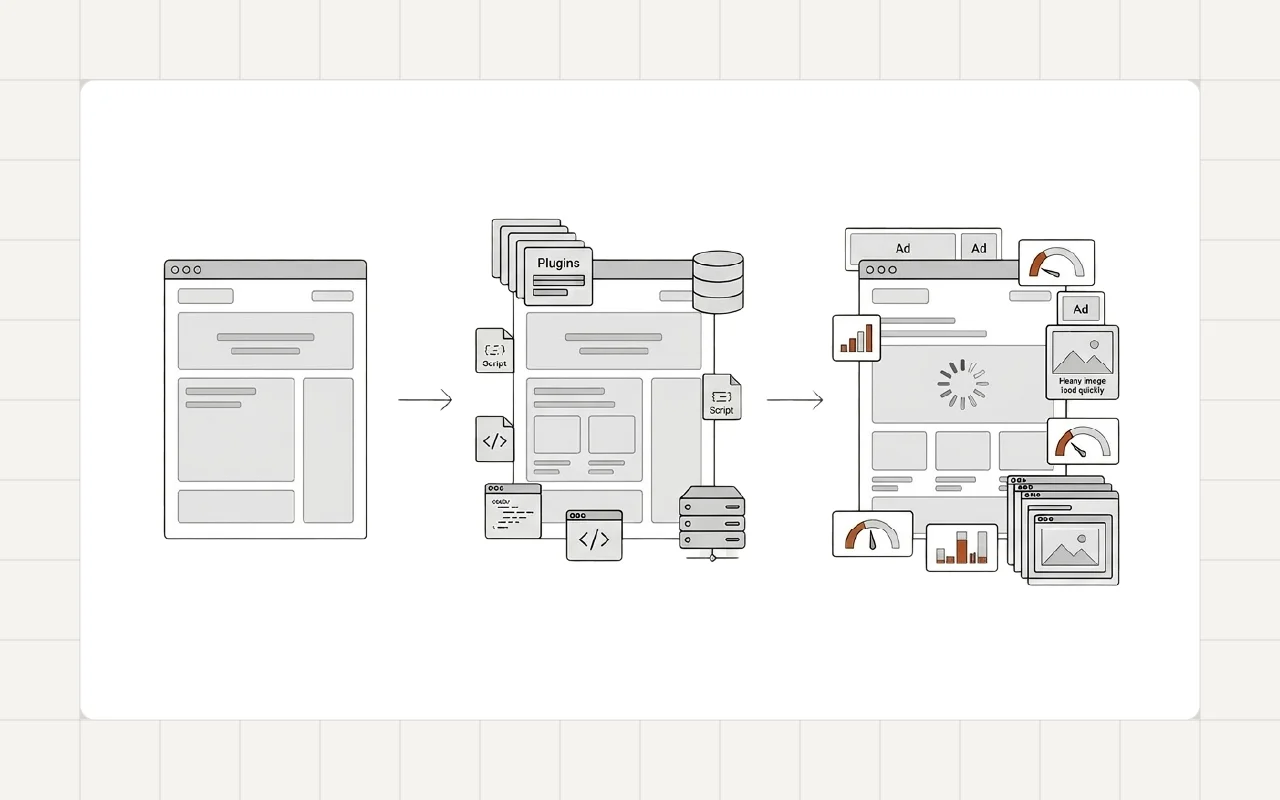
Many websites begin with good performance but gradually become slower.
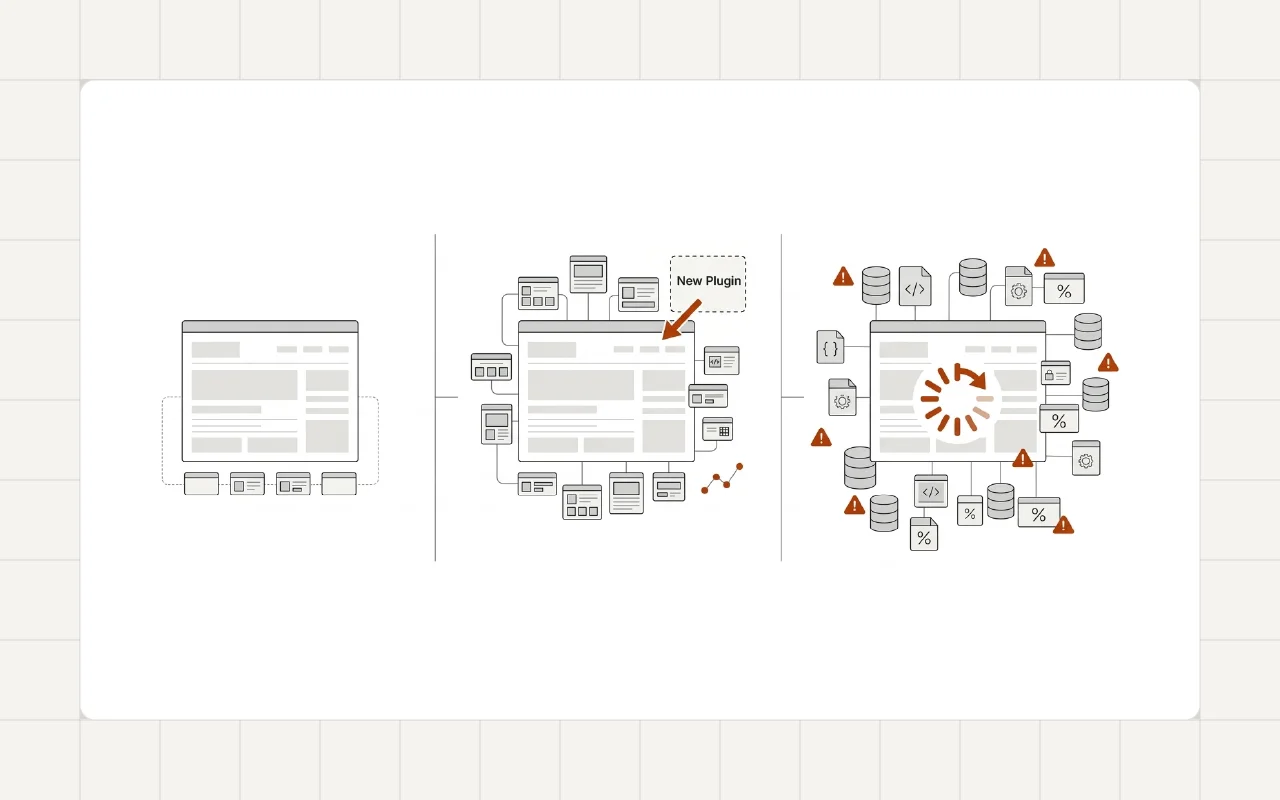
New plugins are installed. Layouts become more complex. Additional scripts are added.
Over time the system accumulates more resources that must load on every page.
This gradual performance decline is explained in Why Most WordPress Websites Become Slow Over Time.
A performance-first approach focuses on preventing this accumulation from becoming a problem.
The Role of Clean Architecture
Performance is closely connected to system structure.
When themes, plugins, and assets are organized clearly, the website becomes easier to optimize.
Clean architecture typically emphasizes:
- clear separation of functionality
- reusable components
- predictable asset loading
This structured approach is discussed in more detail in Clean WordPress Architecture for Long-Term Maintainability.
Plugin Discipline
Plugins are useful, but they also introduce overhead.
Each plugin can add:
- database queries
- CSS and JavaScript files
- background processes
When too many plugins accumulate, the system becomes heavier and harder to optimize.
This pattern often leads to the performance problems described in Why Plugin Bloat Slowly Breaks WordPress Websites.
Performance-focused development emphasizes careful plugin selection and avoiding unnecessary overlap.
Controlling Asset Loading
A common performance problem is loading scripts and styles globally across the website.
Many plugins and themes load assets on every page even when they are not needed.
Selective asset loading improves performance by ensuring only necessary resources load for each page.
This approach can significantly improve metrics such as those described in Real Causes of Poor Core Web Vitals in WordPress.
Media Optimization
Images and videos are often the largest files on a page.
Optimizing media assets helps reduce page weight and improve loading speed.
Important practices include:
- compressing images
- using modern formats
- loading media responsively
- avoiding oversized files
Even small improvements in media handling can noticeably improve performance.
Real-World Example
Performance-focused development becomes especially valuable for websites expected to grow over time.
For example, during the WordPress Performance Optimization for a Travel Agency Website project, restructuring asset loading and optimizing media significantly improved page speed and overall responsiveness.
Applying performance-first principles early in development helps avoid similar problems in future projects.
A Developer Perspective
Performance optimization is often treated as a separate phase after a website launches.
In practice, performance is largely determined during development.
Developers who prioritize performance typically focus on:
- minimal system complexity
- predictable architecture
- controlled resource loading
- long-term maintainability
These principles help keep WordPress systems efficient as they evolve.
Practical Principles for Performance-First Development
Several simple practices can keep WordPress websites fast.
Limit Plugin Dependencies
Install only the plugins that provide clear value.
Structure Themes Carefully
Well-organized templates and components make performance improvements easier.
Load Assets Selectively
Avoid loading scripts and styles across pages where they are not required.
Monitor Performance Early
Testing performance during development helps identify problems before they grow.
Long-Term Perspective
Performance is not just a technical metric.
It directly affects user experience, search visibility, and long-term maintainability.
Websites designed with performance in mind from the beginning usually remain easier to maintain and optimize over time.
Conclusion
Many WordPress performance problems originate during development.
A performance-first approach focuses on clean architecture, minimal dependencies, and controlled asset loading.
These practices help keep websites fast and maintainable as they grow.
If you’re planning a new WordPress project and want performance built into the architecture from the start, feel free to reach out.