When Elementor Is the Right Choice — And When It Isn’t
Elementor can be a powerful tool for WordPress websites, but it isn’t always the best solution. Learn when Elementor works well and when custom development is better.
Chapters
Elementor is one of the most widely used page builders in the WordPress ecosystem.
It allows websites to be designed visually without writing code. Layouts can be created quickly, and content editors can update pages directly from the browser.
For many projects, this flexibility is extremely useful.
However, Elementor is not the right solution for every website. Understanding when it works well — and when another approach may be better — helps avoid long-term performance and maintenance issues.
Why Elementor Became So Popular
Elementor solved a common challenge in WordPress development.
Traditional themes often required developers to modify templates or write custom code to change layouts.
Elementor introduced a visual editor where pages could be designed directly on the screen.
This approach made it easier to:
- build complex page layouts
- update content visually
- create landing pages quickly
- give non-technical teams control over page design
For many businesses, this level of flexibility is valuable.
When Elementor Works Well
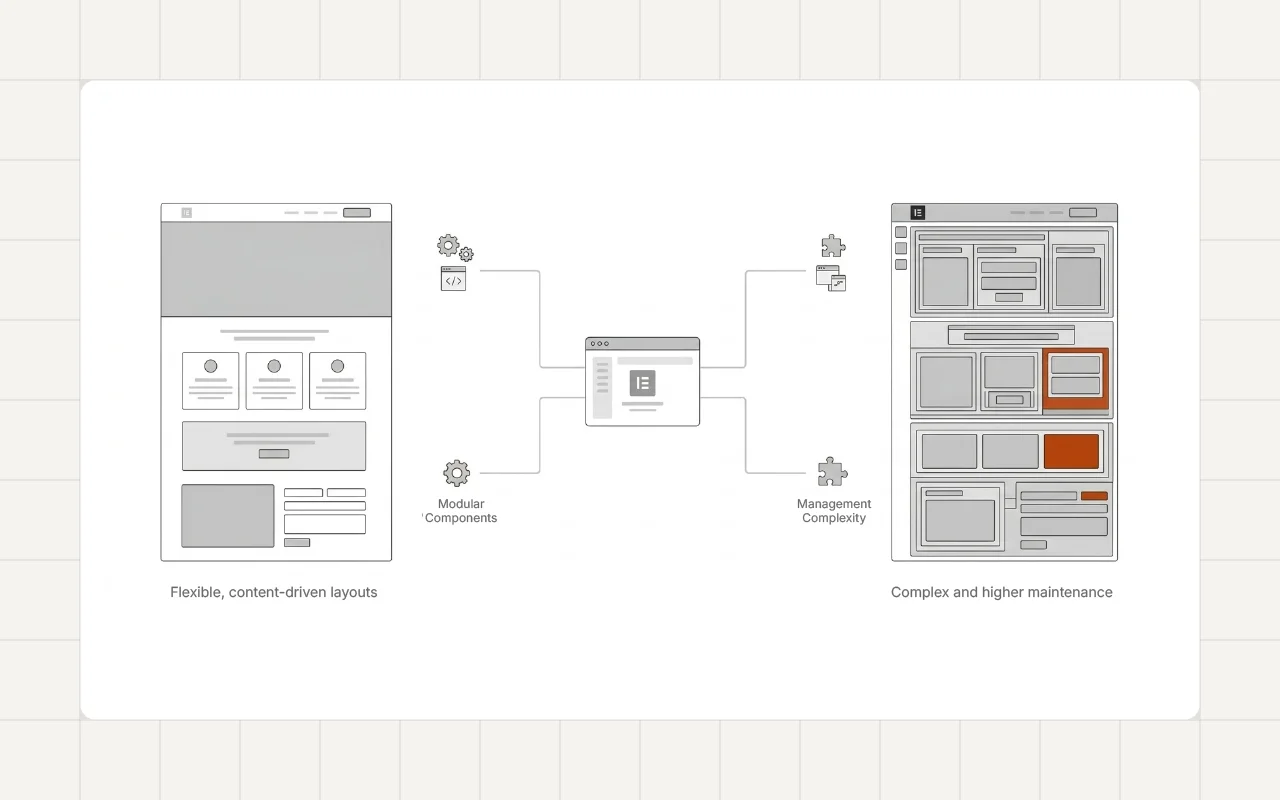
Elementor is often a good fit for projects that prioritize flexibility and speed of development.
Examples include:
- small business websites
- marketing websites
- landing page campaigns
- websites with frequent design changes
In these situations, Elementor allows teams to update layouts and content without requiring developer intervention.
Projects like the Creative Coaching Website Built with Elementor for a Teen & Parent Program demonstrate how Elementor can support flexible content management when structured carefully.
When Elementor May Not Be the Best Fit
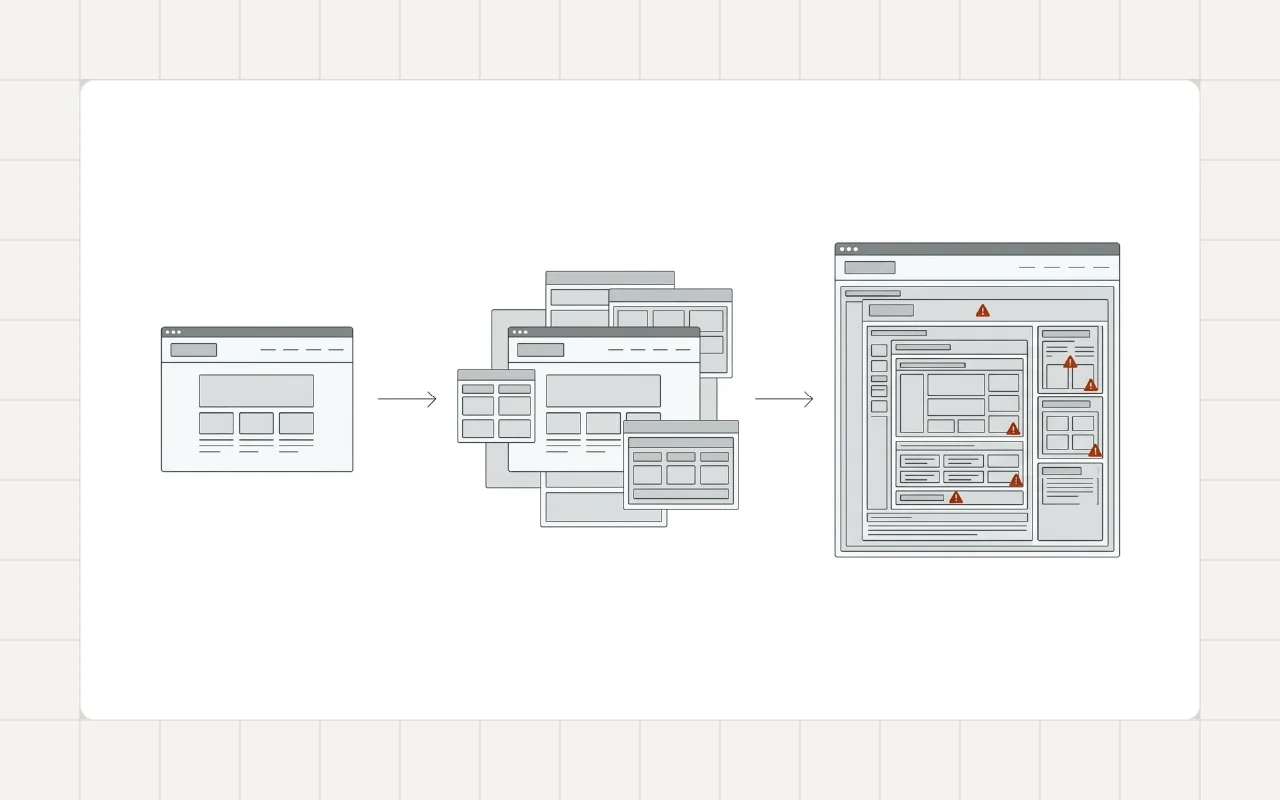
While Elementor is powerful, it introduces additional layers of structure and scripts that can affect long-term performance and maintainability.
These issues rarely appear immediately. They usually emerge as the website grows.
Over time, Elementor websites may accumulate:
- builder extensions
- complex nested layouts
- additional scripts and styles
- overlapping plugins
These structural layers can make the website heavier and more difficult to maintain.
This type of complexity is explored in The Hidden Maintenance Cost of Page Builders.
Performance Considerations
Page builders typically add additional HTML layers and script frameworks to support visual editing.
While these features provide flexibility, they can increase page weight and rendering time.
As websites grow, this overhead can contribute to performance issues such as those described in Why Most WordPress Websites Become Slow Over Time.
For projects where performance is a primary concern, a more controlled development approach may provide better long-term results.
Maintenance and System Growth
Maintenance complexity often increases when Elementor sites accumulate multiple extensions and layout variations.
Large websites may eventually contain:
- many reusable templates
- nested layout structures
- page builder add-ons
These factors can make updates and debugging more difficult over time.
Some of these issues overlap with the broader maintenance challenges discussed in Why Many WordPress Websites Become Hard to Maintain.
When Custom Development Makes More Sense
Custom WordPress development is often a better fit for projects that require:
- high performance
- complex functionality
- structured architecture
- long-term scalability
In these cases, a custom development approach provides more control over how the system behaves.
The long-term differences between these approaches are discussed further in Custom WordPress vs Page Builders: A Long-Term Perspective.
A Balanced Perspective
Elementor is neither a perfect solution nor a bad one.
It is simply a tool.
When used appropriately and structured carefully, Elementor can support flexible and manageable websites.
When projects require greater control over architecture and performance, custom development often becomes the better option.
The key is choosing the approach that best matches the goals of the project.
Conclusion
Elementor has made WordPress development more accessible and flexible.
For many websites, it provides an effective way to design and manage pages visually.
However, understanding its limitations helps prevent performance and maintenance challenges as the website grows.
Choosing the right development approach from the beginning can make a significant difference in the long-term success of a project.
If you’re deciding whether Elementor or a custom WordPress solution is the right approach for your project, feel free to reach out.