How the Project Process Works
Learn how projects move from request to delivery, including scope definition, payments, development workflow, and final launch.
Chapters
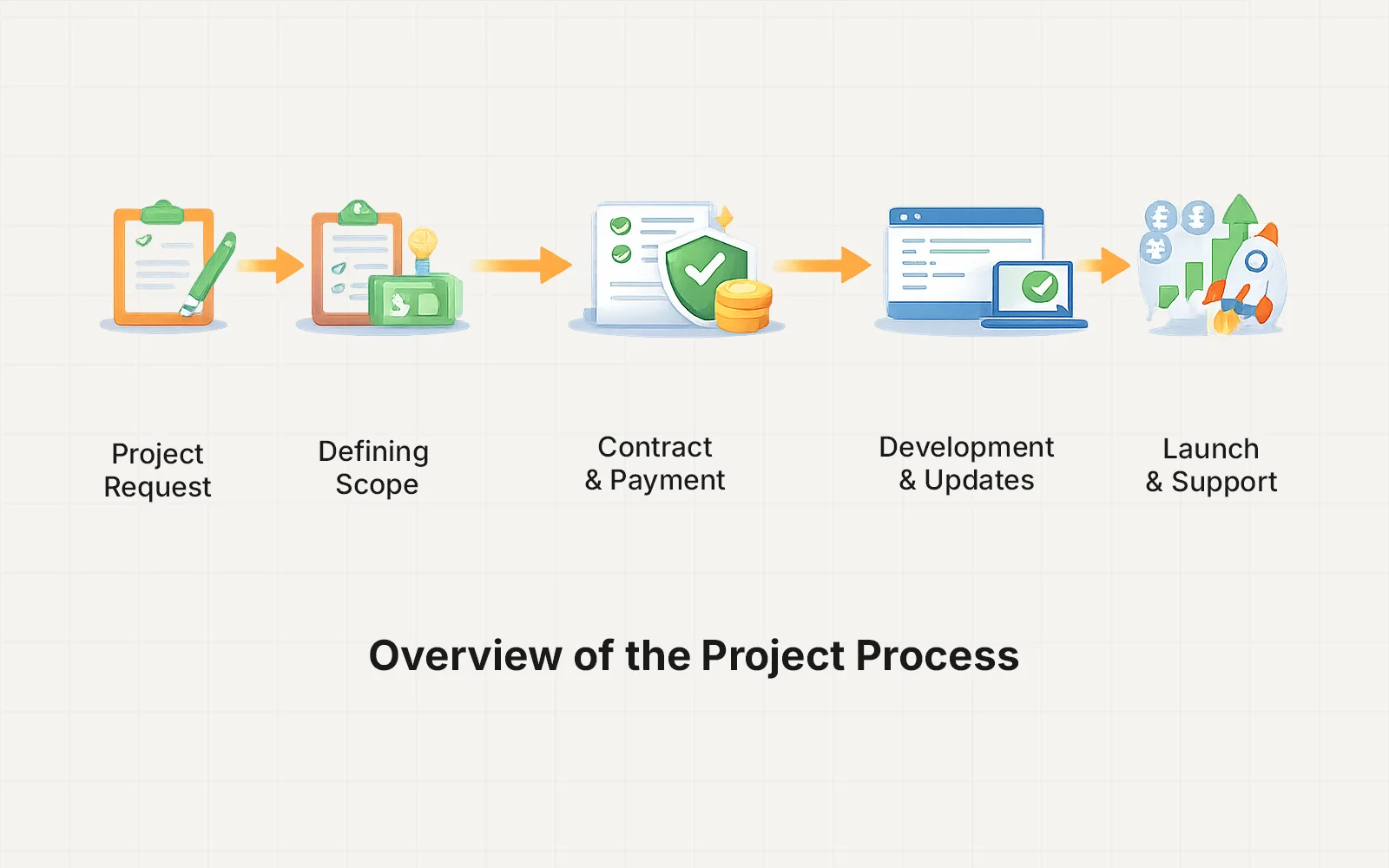
Every project follows a structured process designed to keep development efficient, transparent, and predictable.
From the initial request to final delivery, each step ensures that requirements are clearly defined, progress is visible, and the final result meets the agreed goals.
This guide explains what typically happens after you submit a project request.
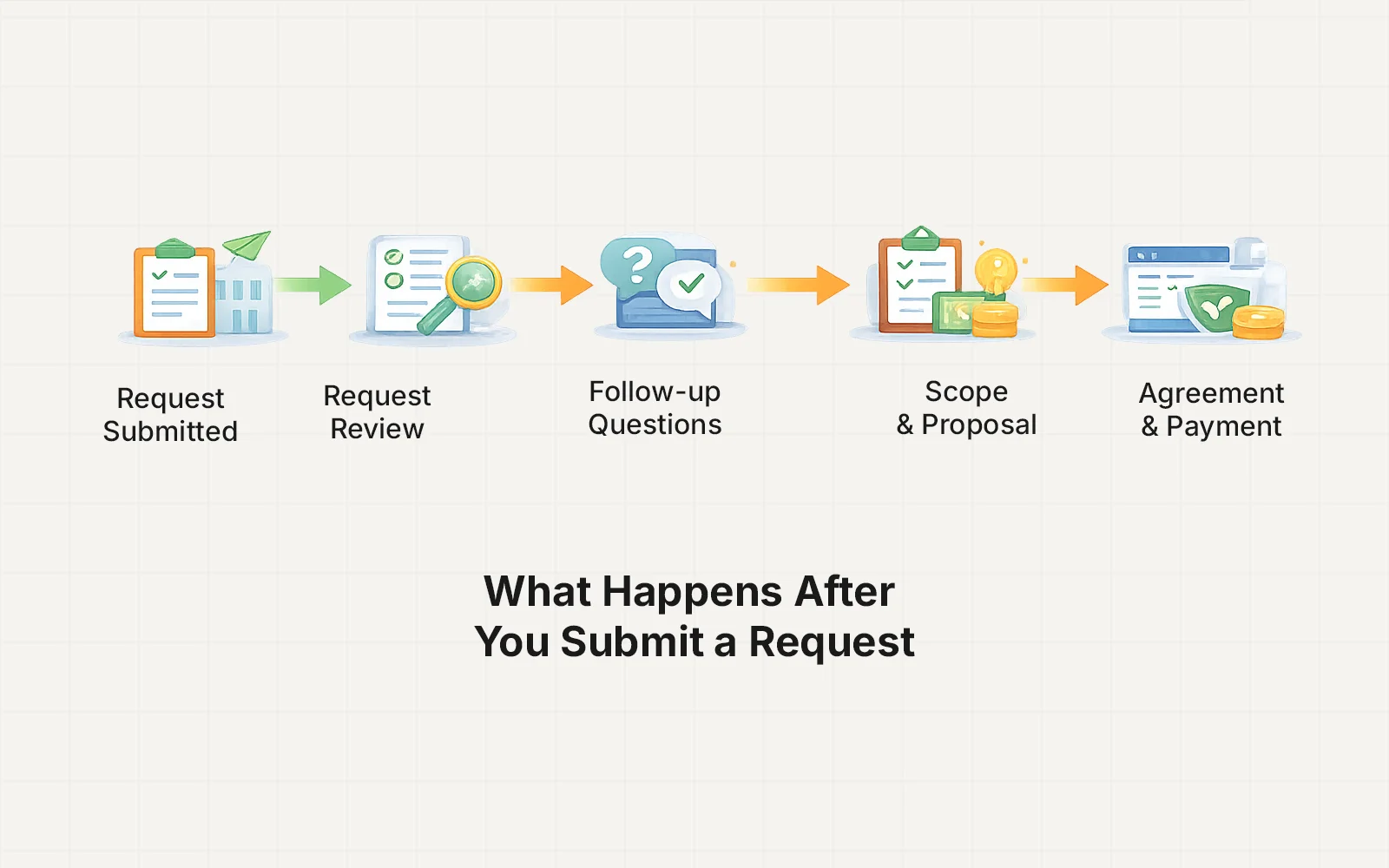
Step 1 — Project Request Review
Once you submit a request through the Start a Project form, the details are carefully reviewed.
This includes:
- Your project goals
- Technical requirements
- Budget range
- Timeline expectations
If anything needs clarification, you may receive a short follow-up message.
You can expect a response within 24 hours in most cases.
Step 2 — Project Scope & Recommendations
After reviewing your request, the next step is defining the project scope.
This typically includes:
- Recommended technical approach
- Feature breakdown
- Estimated timeline
- Project cost or milestone structure
For larger projects, the work may be divided into milestones to keep development organized.
Step 3 — Project Agreement & Payment Setup
Once the scope is confirmed, the project moves to the agreement stage.
Depending on the project type, payment may be handled through:
Upwork Direct Contract
Used for larger projects that require milestone payments and escrow protection.
Payoneer Invoice
Often used for smaller projects or one-time tasks.
Once the first payment or milestone is funded, the project officially begins.
Step 4 — Development & Progress Updates
During development, work progresses according to the agreed timeline.
You can expect:
- Regular updates
- Progress demonstrations when needed
- Clear communication if questions arise
This ensures the project stays aligned with the original plan.
Step 5 — Review & Adjustments
Once the core work is completed, you will have an opportunity to review the results.
At this stage:
- Requested adjustments can be made
- Final refinements are applied
- Performance and functionality are tested
The goal is to ensure everything works as expected before final delivery.
Step 6 — Final Delivery
After approval, the final version of the project is delivered.
Depending on the project type, this may include:
- Website launch
- Deployment to production
- Documentation or instructions
- Performance optimization
Once complete, the project is officially closed.
Step 7 — Ongoing Support (Optional)
Some clients choose to continue with WordPress maintenance plans after project completion.
Maintenance plans typically include:
- WordPress updates
- Security monitoring
- Backups
- Performance checks
- Ongoing technical support
This ensures the website remains secure, fast, and stable over time.
Typical Project Timeline
Every project is different, but a typical workflow may look like this:
- Project request review: within 24 hours
- Scope confirmation: 1–2 days
- Development phase: depends on project complexity
- Final delivery: after review and approval
Clear timelines are always discussed before development begins.
Communication During the Project
Communication is kept simple and efficient.
Most projects are managed through:
- Email updates
- Project messages
- Platform communication (for Upwork projects)
Calls or meetings may be scheduled when needed, but many projects run smoothly without them.
Have Questions Before Starting?
If you are unsure whether your project is a good fit, you can submit a project request or reach out with a short description of what you’re planning to build.
This helps determine the best approach before work begins.